
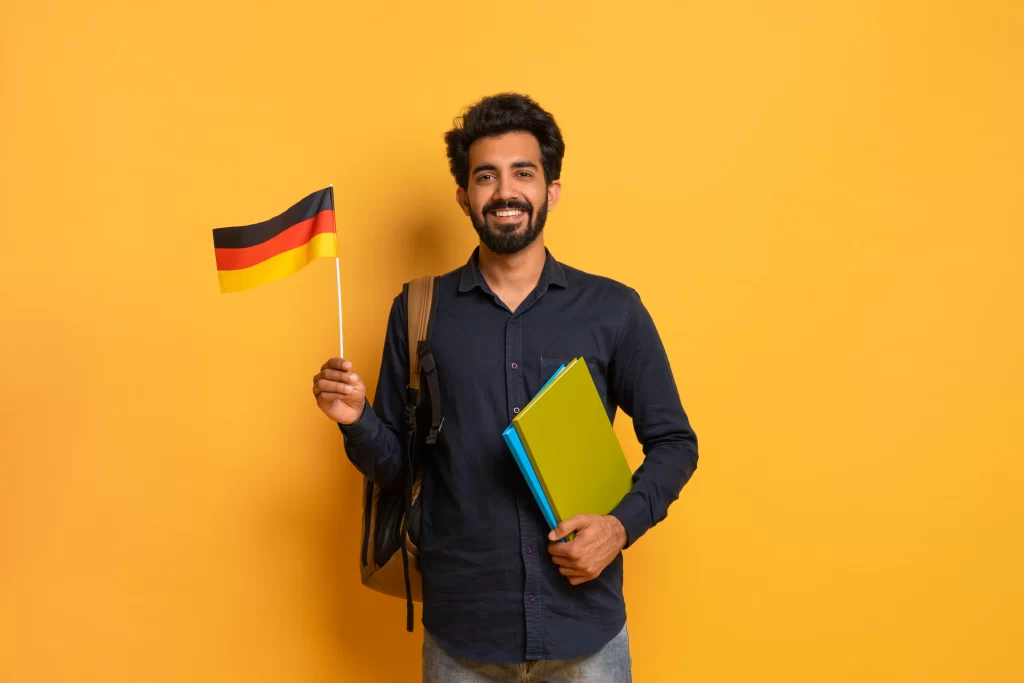
For decades, the ultimate dream for many ambitious Indian students was a degree from the United States or Canada. These destinations represented the pinnacle of academic achievement and a gateway to a global career. However, a significant shift is happening. By 2025, a new powerhouse has emerged as the preferred choice for students from Kerala and across India: Germany. The conversation is changing from “Which Ivy League?” to “Which TU9 university?”
So, what is driving this massive change? It’s not a single factor, but rather a powerful combination of affordability, quality, and a clear, welcoming path to a long-term career. While the US and Canada grapple with soaring tuition costs and increasingly complex immigration pathways, Germany is rolling out the red carpet. It offers a practical, high-value proposition that resonates deeply with the aspirations of today’s Indian students.
This blog post explores the compelling reasons behind this trend. We will directly compare these three academic giants across the factors that matter most to you and your family. Consequently, you’ll understand why choosing to study in Germany is not just a good option, but arguably the smartest one for your future. Furthermore, we’ll explain how the right guidance can make this dream a reality.
Factor 1: The Financial Equation – Unbeatable Affordability
The single biggest barrier to overseas education is cost. This is where Germany completely changes the game, leaving its North American counterparts far behind.
The US and Canada: A Story of Soaring Debt Let’s be direct. Studying in the US or Canada is incredibly expensive. In the United States, annual tuition fees for international students at a decent public university can easily range from $25,000 to $50,000. For private universities, this figure can skyrocket even higher. Similarly, in Canada, international students can expect to pay between CAD 20,000 and CAD 40,000 per year for an undergraduate degree. These numbers don’t even include the steep cost of living, which can add another $15,000 to $20,000 annually.
While scholarships exist, they are intensely competitive and rarely cover the full cost. As a result, most Indian students and their families must take on substantial education loans, starting their careers under a heavy burden of debt. This financial pressure can be immense, overshadowing the entire study abroad experience.
Germany: The World-Class, Tuition-Free Alternative In stark contrast, Germany offers a revolutionary model. The vast majority of Public Universities in Germany charge zero tuition fees for both Bachelor’s and Master’s degrees, for all students, including Indians. This is not a promotional gimmick; it is a state-funded policy. You get a globally recognized degree for free.
Students are only required to pay a small semester contribution of around €150-€350. This fee usually includes a public transport pass for the entire city, adding even more value. Your primary expense, therefore, becomes your living cost. The German government recommends a budget of around €11,208 per year (roughly €934 per month) to be shown in a blocked account for your student visa. When you compare this to the combined tuition and living costs in the US and Canada, the savings are astronomical. This financial freedom allows students to focus on their studies, learn German, and travel, leading to a much richer, stress-free experience.
Factor 2: Quality of Education – Where Tradition Meets Innovation
Affordability means nothing without quality. Fortunately, Germany’s academic infrastructure is among the best in the world. German degrees are held in high esteem globally, and its universities consistently rank among the top for engineering, technology, and research.
The US and Canada: A Focus on Rankings The US boasts many of the world’s top-ranked universities, and Canada also has a strong academic reputation. Their educational model often emphasizes a broad, liberal arts-style education, with a strong focus on student participation and extracurricular activities. However, the quality can vary significantly between institutions, and getting into the top-tier universities is hyper-competitive.
Germany: A Focus on Specialization and Employability Germany offers a different kind of excellence. The system is renowned for its depth, rigor, and strong emphasis on research and practical application. Universities like the TU9 (an alliance of Germany’s leading technical universities) are global leaders in engineering and technology.
Moreover, the German system offers two distinct types of institutions:
- Universities (Universitäten): These are research-focused, ideal for students who want to delve deep into theory and potentially pursue a PhD.
- Universities of Applied Sciences (Fachhochschulen): These are practice-oriented, working closely with industry to provide students with hands-on skills for the job market.
This dual system allows you to choose an educational path that perfectly matches your career goals. Therefore, you graduate not just with a degree, but with tangible, in-demand skills, making you highly employable from day one.
Factor 3: Post-Study Work Opportunities – A Clear and Welcoming Path
A foreign degree is an investment, and the return on that investment often depends on the ability to work in that country after graduation. Here, Germany provides a clear and supportive framework.
The US and Canada: A Path of Uncertainty In the US, international graduates can apply for Optional Practical Training (OPT), which allows them to work for 12 months (with an extension for STEM fields). However, to stay longer, they must be sponsored by an employer for an H-1B work visa. The H-1B is a lottery-based system, meaning that even with a great job offer, your chances of staying are left to luck. This uncertainty is a major source of stress for Indian graduates.
Canada offers a Post-Graduation Work Permit (PGWP), which is more straightforward. The length of the permit depends on the length of your study program. To stay permanently, however, you must navigate the points-based Express Entry system, where your age, education, and work experience are measured against other applicants. The bar for this is continuously rising.
Germany: A Path of Certainty and Opportunity Germany actively encourages talented graduates to stay and work. After completing your degree, you are eligible for an 18-month post-study work visa to find a job related to your field. This is a generous timeframe to secure a position.
Once you have a job offer, converting this visa into a German Work Visa or an EU Blue Card is a transparent, criteria-based process. It is not a lottery. If you meet the salary and qualification requirements, you will get the permit. Germany has a strong economy with a high demand for skilled professionals, particularly in IT, engineering, healthcare, and finance. This creates a perfect alignment: the country needs skilled people, and it provides a clear legal path for them to stay. For Indian students, this certainty is a massive advantage.
Factor 4: The Journey to Permanent Residency – Stability for the Long Term
For many students, studying abroad is also the first step toward building a new life. The ease of transitioning from a temporary work visa to permanent residency (PR) is a critical factor.
The US and Canada: A Long and Winding Road In the US, the path to a Green Card (permanent residency) is notoriously long and complex, often taking more than a decade for Indian nationals due to country-based quotas. In Canada, while the Express Entry system is faster, it is highly competitive and offers no guarantees.
Germany: A Fast and Transparent Track Germany, in contrast, offers one of the fastest and most straightforward pathways to permanent residency in the Western world. If you hold an EU Blue Card, you can apply for a permanent residence permit in just 33 months. If you can also demonstrate B1-level German language proficiency, this period is shortened to only 21 months. This clear, achievable timeline provides incredible stability and peace of mind, allowing you to plan your life and career in Germany with confidence.
Making the Right Choice with the Right Partner
Navigating the German university application and visa process can seem complex, but you don’t have to do it alone. This is where the expertise of a professional consultant becomes invaluable. A trusted Study abroad agency in Kerala can guide you through every step, from selecting the right university to preparing your documents for the visa interview.
As your dedicated Europe study partner in kerala, we help you understand the nuances that search engines can’t tell you. We provide personalized advice to ensure you choose a course that aligns with your career goals and a city that fits your lifestyle. The best german education consultants in kerala act as your advocate, ensuring your application is strong and your transition to Germany is smooth.
Frequently Asked Questions (FAQ)
Q1: Is the quality of free German universities lower than paid universities in the US? Absolutely not. The concept of “free” does not mean “low quality.” German public universities are state-funded because Germany views education as a public good, not a commercial product. Institutions like the Technical University of Munich and RWTH Aachen are world-renowned and often outperform many paid US universities in engineering and technology rankings.
Q2: Is learning German mandatory to study or work in Germany? For studying, it depends. There are hundreds of Master’s programs taught entirely in English. For working, while many international companies use English, knowing German significantly expands your job opportunities and makes social integration much easier. Germany offers a clear path to PR faster if you have German skills, providing a strong incentive to learn.
Q3: Is it difficult to find a part-time job in Germany as a student? It is quite common for students to work part-time. International students can work up to 120 full days or 240 half days a year. While it’s easier to find jobs if you speak some basic German, there are opportunities available in big cities, especially in the service industry or as on-campus research assistants.
Q4: How does the culture in Germany compare to the US and Canada for an Indian student? Germany is a very organized, punctual, and efficient society. It is multicultural, especially in larger cities, but integrating might require more effort compared to the more overtly immigrant-friendly cultures of the US and Canada. However, Germans are welcoming, and there are large Indian communities. The emphasis on work-life balance in Germany is a significant plus that many graduates appreciate.
Takeaway
The decision to study abroad is one of the most significant choices you will ever make. While the US and Canada have been traditional favorites, the landscape in 2025 has clearly changed. Germany now presents a uniquely compelling offer for Indian students: a world-class, tuition-free education, a robust job market hungry for your skills , and a fast, transparent pathway to permanent residency. It is a choice based not on old dreams, but on modern practicalities—a decision that prioritizes quality, affordability, and long-term stability. For the ambitious Indian student looking for the smartest return on their investment, Germany is, without a doubt, the new land of opportunity.
How we reviewed this article
We have strict sourcing guidelines and rely on peer-reviewed studies and academic research. We only use quality, credible sources to ensure content accuracy and integrity.